ServicesPool Drain and Refill
Pool Drain and Refill in Coolidge
Some water can't be fixed with another bag of chemicals. We drain the pool carefully, look over the surface and fittings while it's empty, refill it and balance the new water so your pool starts clean and stays easier to keep.
When fresh water is the sensible fix
Pool water wears out. Every top-off in hard desert water adds calcium, every puck of trichlor adds stabilizer, and every evaporated inch leaves dissolved solids behind. After a few seasons the chlorine stops working the way it should, cloudiness keeps returning and scale builds faster than you can scrub it.
A heavy monsoon storm can shorten that timeline. Dust, runoff and debris load the water with phosphates and fine silt that filters struggle to remove. Rather than chase readings for weeks, we test first and tell you plainly whether a drain makes sense or whether the water can still be corrected.
If it does need draining, we handle it as a controlled job, not just pulling a plug. The finish on your pool is exposed while the water is out, so how we drain, how long it sits and how we refill all matter to the surface you paid for.
What a drain and refill includes
- Water test before we start
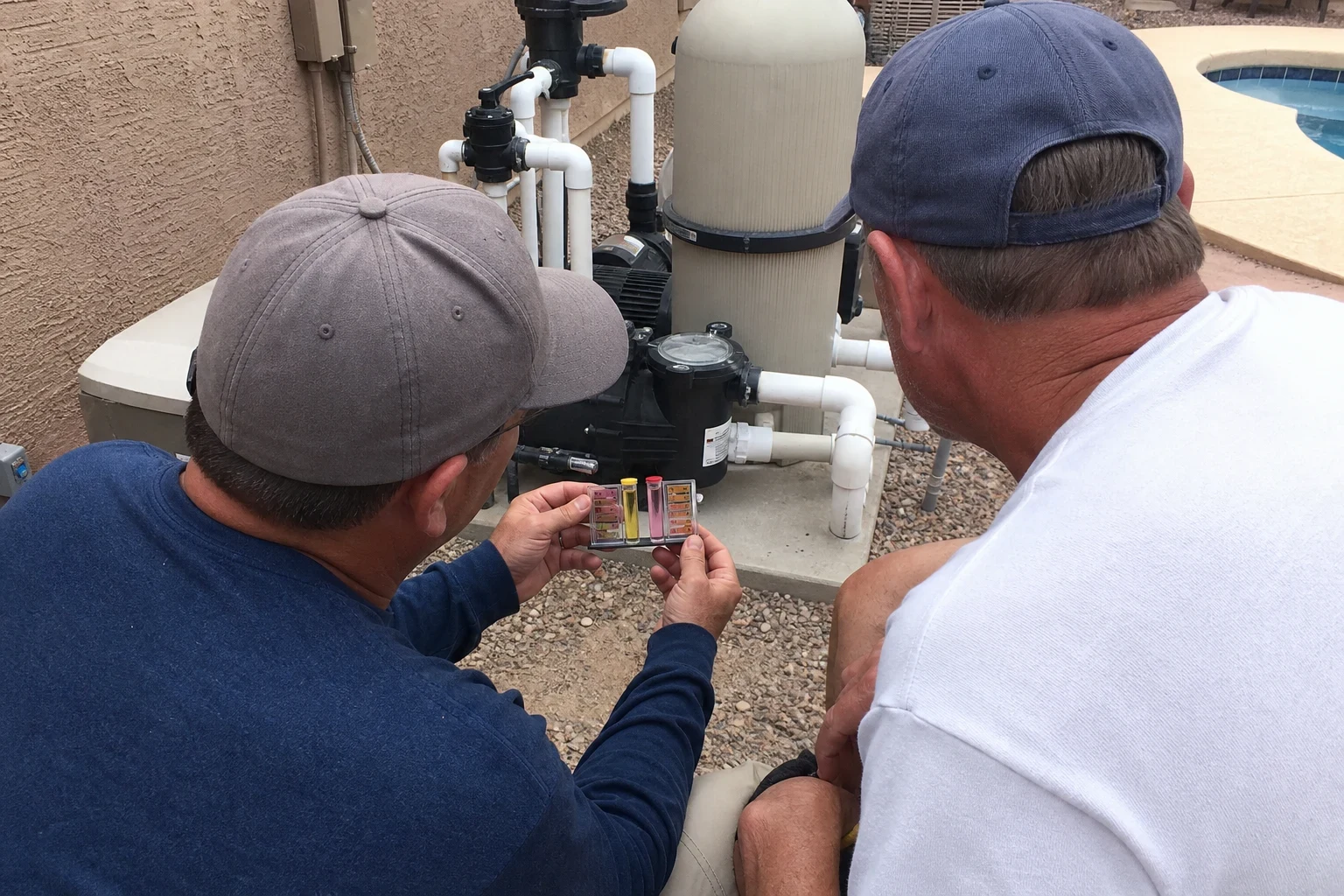
- We check calcium hardness, cyanuric acid and total dissolved solids so you can see why the water needs replacing. If a partial drain will bring the numbers back, we tell you that instead.
- Controlled draining
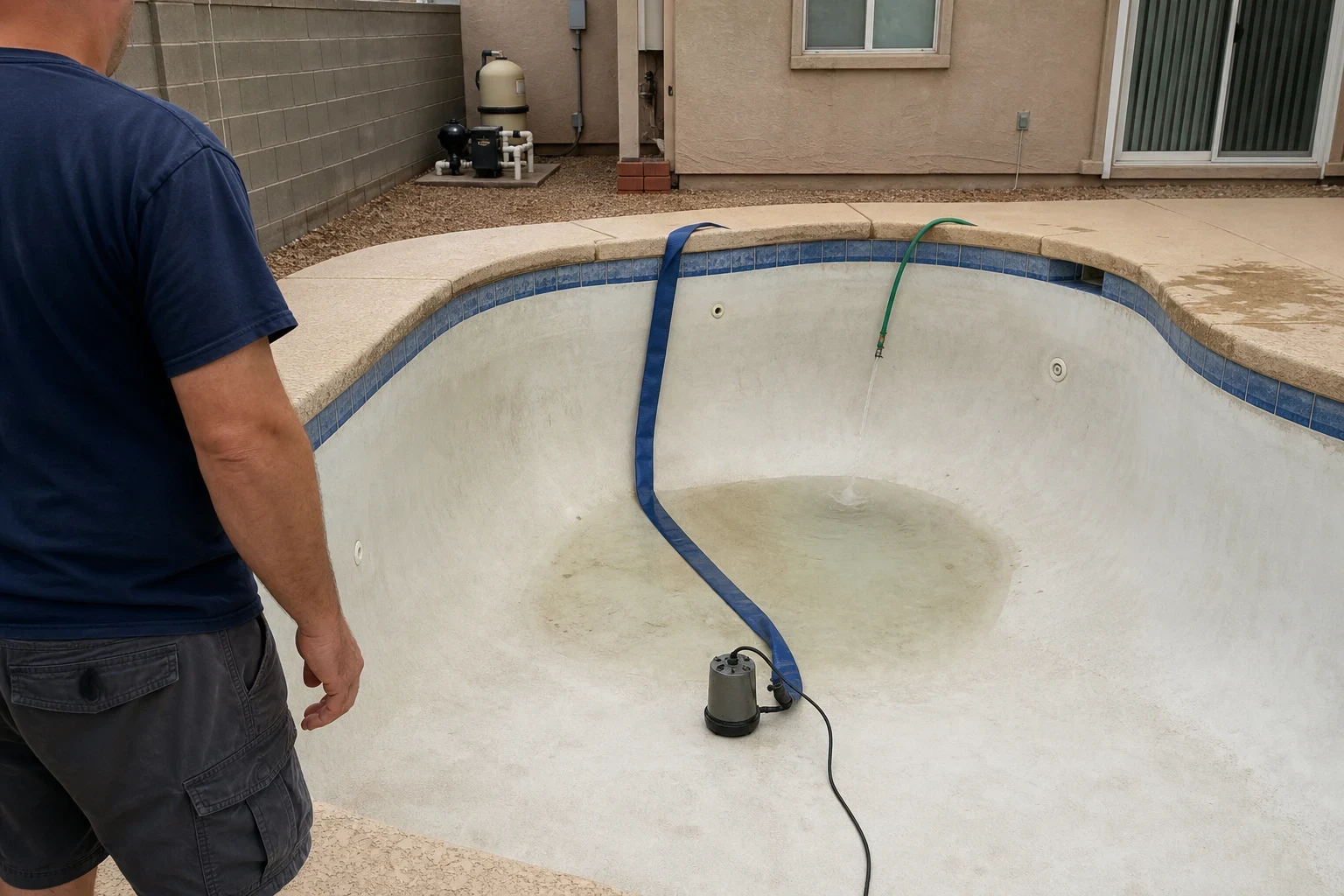
- We use a submersible pump and route the discharge where local rules allow, usually a sewer cleanout rather than the street. Equipment is shut down and protected before the water drops below the skimmer.
- A close look at the empty shell
- With the pool empty we inspect plaster, tile line, returns, lights and the main drain cover. You get a clear description and photos of anything worth attention. We are ROC licensed, and any repairs we find are completed in-house by our own crew, not subcontracted.
- Refill with surface care
- We keep the hose at the deep end with a cloth wrap so the stream doesn't mark the finish, and we watch the fill so the surface isn't left half exposed in the sun.
- Start-up balancing
- Fresh fill water is rarely balanced. We bring pH, alkalinity, calcium and stabilizer into range and set your chlorine so the new water protects the plaster from the first day.
Signs your water is ready to be replaced
Chlorine that never holds
High stabilizer locks chlorine up. If you keep adding more and still see algae or cloudiness, the water itself is often the problem.
White crust forming quickly
Calcium scale along the tile line or on the waterfall that returns within weeks of cleaning points to hardness that only dilution will fix.
Water still murky after a storm
If silt and dust from a monsoon have run the filter for days and the water still looks dull, a fresh start is often faster and cheaper than more chemicals.
It's been years since the last drain
Most desert pools benefit from new water every few years, even when they look fine.
You're planning surface work
An acid wash, tile cleaning or a plaster repair all need an empty pool, so the timing lines up well.
What moves the price
We give you a free quote by phone and confirm it after seeing the pool, with each part of the job listed. The cost depends on the pool and what we find once it's empty, not a one-size figure.
Pool size and depth
More gallons mean longer pumping, a longer refill and more start-up chemicals.
Discharge access
How far the hose must run to an approved drain point, and whether a cleanout is easy to reach, affects setup time.
Debris left behind
A pool full of storm silt or leaves takes more cleanup on the floor than one drained on a schedule.
Added surface work
Pairing the drain with an acid wash or calcium removal and tile cleaning adds labor but saves draining twice.
How the day runs
- 1
Test and plan
We confirm the readings, check the weather and agree on timing. Cooler months are kinder to an exposed finish, so we avoid draining in peak summer heat whenever we can.
- 2
Drain and protect
The pump runs until the pool is empty, with equipment turned off and the discharge line watched. Most pools drain within a working day, depending on size.
- 3
Inspect and clean
We clear the silt and debris left on the floor, rinse the surface and walk you through what we saw. Any extra work is quoted before it starts.
- 4
Refill and balance
We start the refill right away so the shell doesn't sit dry, then return to balance the water, restart the pump and check the filter pressure.
Drain and refill questions
Can draining a pool damage it?
It can if it's done carelessly. Plaster left dry in hot sun can check or discolor, and fittings can be stressed. That's why we watch the weather, keep the shell empty only as long as needed and start refilling promptly.
Do I have to drain the whole pool?
Not always. When readings are only somewhat high, a partial drain and refill can dilute them enough. We test first and recommend the smaller job if it will do the work.
How long until we can swim again?
Once the refill is complete and the water is balanced and chlorinated, the pool is usually ready shortly after. We'll tell you when the readings are where they should be.
Where does the old water go?
We route it according to local discharge rules, which generally means a sewer cleanout on your property rather than the gutter. We check this before the pump goes in.
Will my water bill go up?
Yes, refilling uses a full pool's worth of water, so expect a one-time increase. Balanced fresh water usually means fewer chemicals in the months that follow.
Start over with water that works
Tell us what you're seeing in the pool and when it was last drained. We'll talk through whether a drain makes sense and what the job would involve.