ServicesPool Repair
Pool Repair in Coolidge, AZ
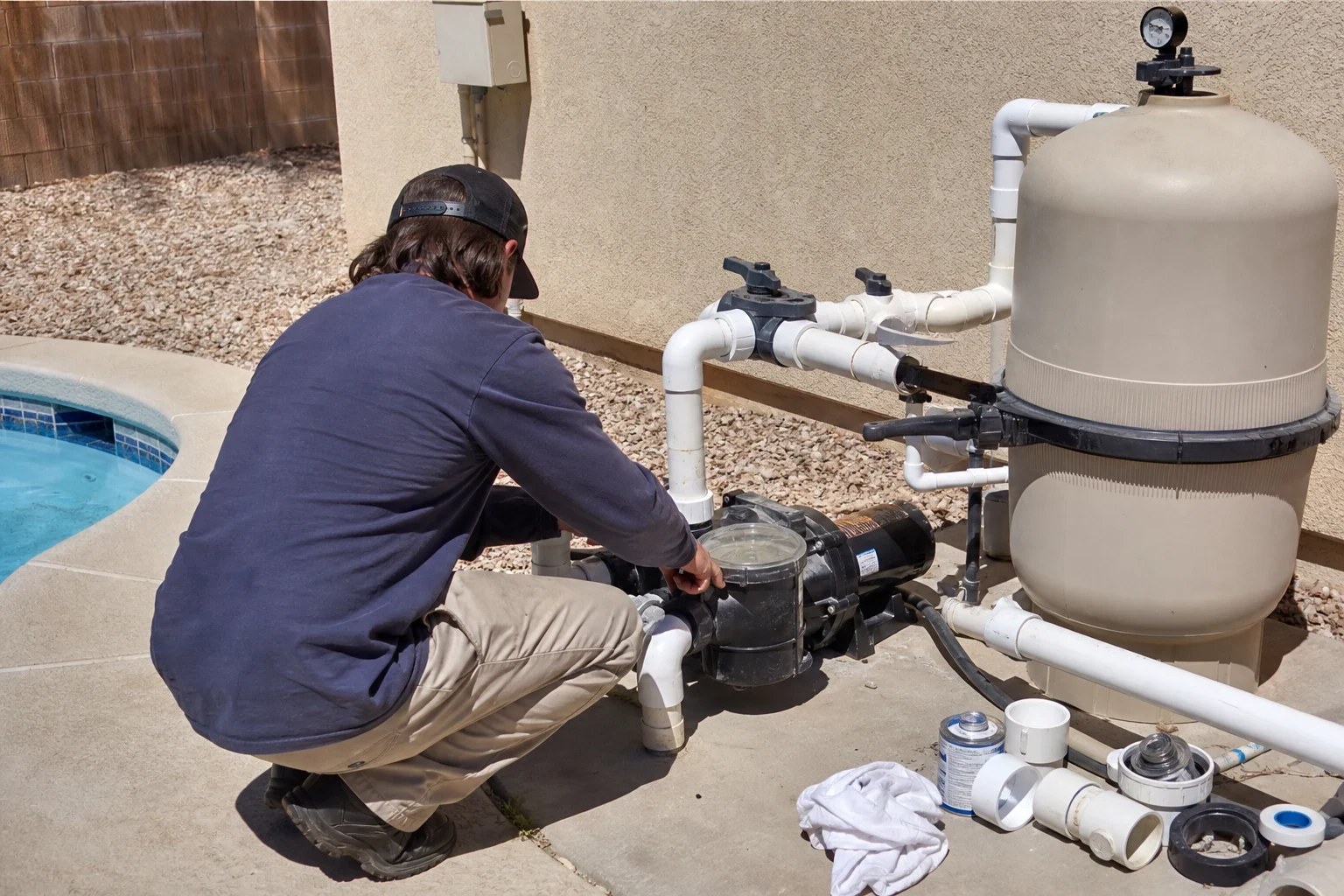
When a pump stops priming, a breaker keeps tripping or a storm leaves the equipment pad a mess, we find the cause and fix it properly. Every repair is done by our own people, and you get a clear explanation before any work starts.
Repairs that start with the cause, not the symptom
Pool repair covers the parts that keep your water moving, filtered and sanitized: pumps and motors, filters, valves, heaters, lights, automation and the plumbing at the equipment pad. Most failures give a warning first. A motor that hums before it starts, or a pressure gauge that keeps creeping up, usually means something is wearing out. Catching it early is almost always the less expensive repair.
Sudden damage is different. Summer monsoons bring dust, branches and power flickers that can pack a pump basket in an afternoon or leave a control board dead. After a storm we work in a steady order: shut down anything unsafe, clear what is choking the system, then test each component before recommending a thing. Some equipment only needs cleaning and a reset. Some does not, and we will tell you which is which.
We are ROC licensed, and all repairs are completed in-house, not subcontracted. The person who diagnoses your system works for the same company that does the repair.
What our pool repair work covers
- Pumps and motors
- We replace bearings, shaft seals, capacitors and impellers, or the whole motor when a rebuild no longer makes sense. On variable-speed pumps we also check the drive and the programmed run settings.
- Filters and multiport valves
- Cracked tanks, broken laterals, torn grids and worn spider gaskets that let water slip to waste. For routine upkeep rather than repair, our filter cleaning service is the better fit.
- Heaters and heat pumps
- Ignition faults, failed pressure switches, bad sensors and scale buildup that keep a heater from firing.
- Equipment pad plumbing
- Sun-brittle PVC, cracked unions, stuck diverter valves and failed check valves above ground at the pad. We cut out damaged sections and rebuild them with proper fittings so the runs sit straight and supported.
- Lights, timers and automation
- Dead fixtures, tripped GFCI circuits and control boards hit by a power surge.
- Cleanup after monsoon damage
- Debris pulled from skimmers and baskets, dusty or wet components dried and inspected, and the system restarted only once it is safe to run.
Signs your pool needs a repair visit
The pump hums but will not start
This usually points to a failed capacitor or seized bearings. Running it this way overheats the motor, so switch it off until it is checked.
Grinding or screeching from the motor
Worn bearings get louder before they fail. Replacing them early can save the motor.
Sand or debris blowing back into the pool
Fine material returning through the jets often means a broken lateral in a sand filter or a torn grid in a DE filter.
Air bubbles in the pump basket
Air on the suction side often comes from a tired lid O-ring or a cracked fitting near the pump. Left alone, it can cause the pump to lose prime and run dry.
A breaker trips after bad weather
Do not keep resetting it. A power surge or water inside a junction box needs a careful look before the equipment runs again.
The heater clicks but never lights
Ignition, pressure switch and flow problems all show up this way, and each has a different fix.
How a repair visit runs
- 1
A short phone call
Tell us what you are seeing and when it started. We ask a few questions about your equipment, set a visit time and explain that your quote is free.
- 2
Diagnosis at the equipment pad
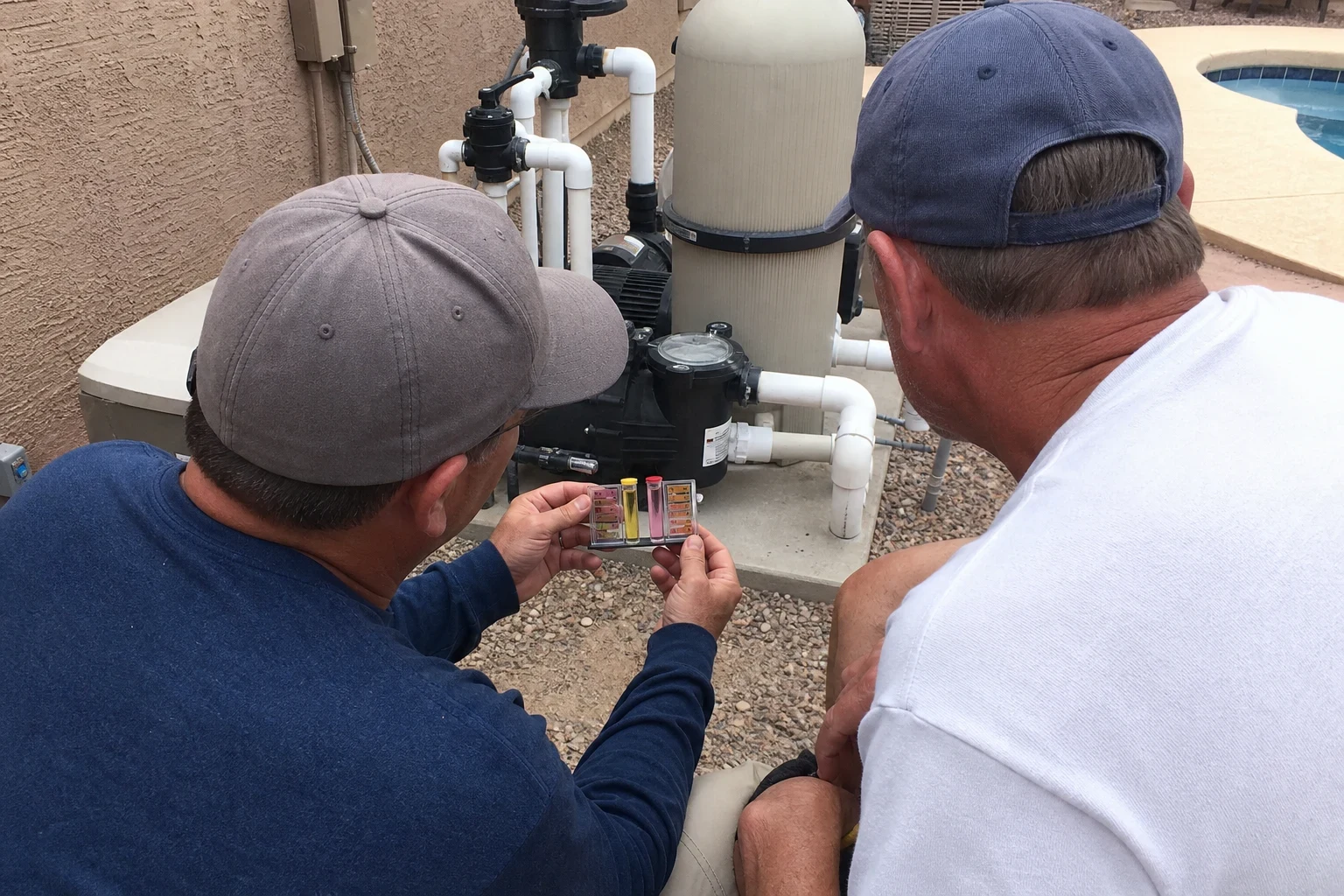
We test voltage, pressure and flow, then the components themselves. You see what we found, with photos when the problem sits inside a housing.
- 3
A written, line-item estimate
Parts and labor are listed separately, along with an honest answer on repair versus replacement. If an older pump needs a new motor, we tell you plainly whether that money is well spent.
- 4
The repair itself
Our own people do the work, with no subcontractor stepping in. We keep tools and old parts off your decking, protect pavers when cutting pipe and clean the pad before we leave.
- 5
Restart and testing
We prime the system, check every fitting we touched, confirm pressure and run times, and point out anything worth watching over the next few days.
What affects the cost of a pool repair
Repair prices depend on the part, the brand and how far the problem has spread through the system. You get a written estimate after diagnosis, so the figure you approve is the figure you see. Nothing is added without asking you first.
- The part and the brand
- A capacitor is a small repair, while a variable-speed drive or heater control board is a larger one. Some brands have parts readily available and others need to be ordered.
- Repair or replace
- Rebuilding a motor costs less up front than a new pump, but not always over time. Federal efficiency rules now steer most replacement pumps toward variable-speed models, which we factor into the recommendation.
- How far the damage reached
- A power surge can take out a timer alone, or a timer, a board and a motor together. Testing each piece keeps you from paying for parts that are still good.
- Access and plumbing condition
- A tight pad or brittle, sun-faded PVC can turn a simple swap into a partial re-plumb, because old pipe often cracks once it is disturbed.
Pool repair questions
Something not covered here? (520) 210-5562
Should I keep running my pool after a monsoon storm?
Turn the pump off if you see heavy debris, standing water around the equipment or any sign of a power problem. Once the power is off, empty the skimmer and pump baskets. If the system will not restart normally or a breaker trips, leave it off and have it looked at.
Is it worth repairing an older pump?
Often it is. Bearings, seals and capacitors are modest repairs that can add years of service. When the housing is cracked or the motor has burned out on a very old single-speed pump, replacement usually makes more sense, and we can handle that through our equipment installation service.
Do I need to be a weekly cleaning customer to get a repair?
No. We repair pools whether or not we clean them. If you later want weekly pool cleaning, we can talk about that separately, with no pressure either way.
How long does a repair take?
Many common repairs, like a capacitor, a motor or a valve, are finished in one visit when the part is on hand. Special-order parts take longer, and we give you the expected wait before you approve the work.
Will my homeowners insurance cover weather damage to my equipment?
Some policies cover equipment damaged by a storm or a lightning surge, and many do not. We can document what we find with photos and a written estimate you can share with your insurer. The coverage decision is theirs, so it is worth checking your policy first.
My equipment was down for days and the water turned green. Can you fix both?
Yes. We repair the equipment first, because clearing the water without circulation does not hold. Once it runs properly, our green to clean recovery service brings the water back.
Get your equipment running right again
Tell us what your pool is doing and we will arrange a visit in Coolidge or nearby towns like Florence and San Tan Valley. Your quote is free, and it comes after we have seen the problem in person.